
Same road. Different approaches.
Nika went inward — to see the road she'd already built, put down what was never hers, and build intentionally from there.
Andrei went outward — to take the next step before he felt ready.
Seeing without moving is incomplete. Moving without seeing is running in the wrong direction.
Same road. Different approaches.
Nika went inward — to see the road she'd already built, put down what was never hers, and build intentionally from there.
Andrei went outward — to take the next step before he felt ready.
Seeing without moving is incomplete. Moving without seeing is running in the wrong direction.
Nicoleta (Nika) Tole
I spent most of my life hiding.
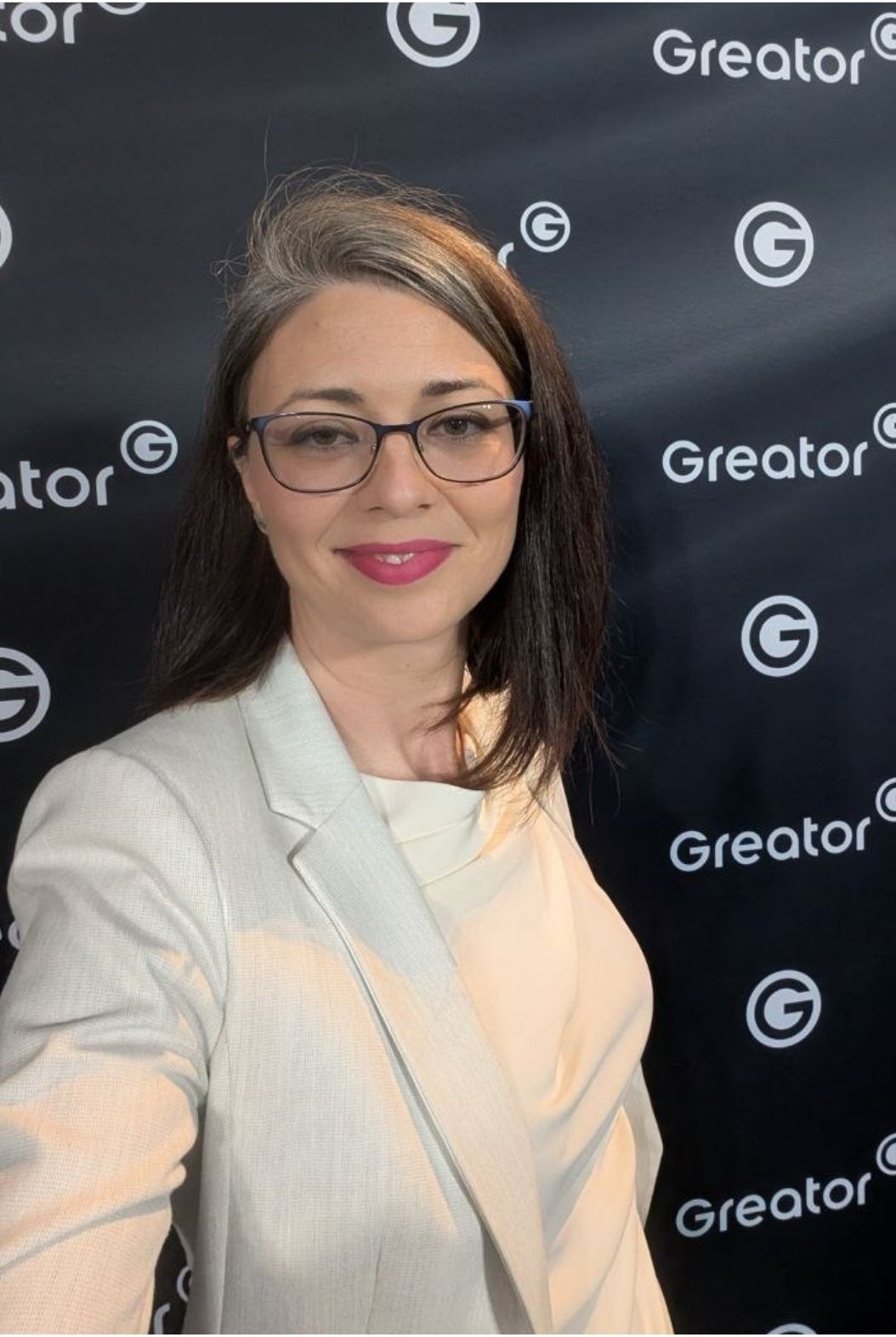
The clearest evidence is the easiest to point at: I've had white hair since I was five years old. For most of my adult life, I spent an exhausting amount of time, energy, and money making sure you would never see it.
But the hair was the smallest thing I was hiding.
My Story
I call the earlier version of myself Pressure Cooker Paula.
For twenty years, I built a career as a double-qualified accountant — solving problems
for global corporations across three different countries. From the outside, the picture
of a successful woman who had it all together. Behind closed doors, I was always simmering, always one crisis away from boiling over. Winning in business. Completely losing myself to the performance.
The clearest moment — the one I now tell whenever I'm asked how it really was: it was Christmas Day. My family was in the same room. I was at my laptop, working on something I already knew was a temporary fix. I knew it. And I was doing it anyway. On Christmas. Because finishing it felt more important than being in the room with the people I loved.
That was Paula. A superwoman — which, by the way, is not a good thing.
She needed to be the good girl. The one who got good grades. The one everyone called reliable. She was looking for permission to exist — and she was looking for it everywhere except inside herself.
The next time you see someone working themselves into the ground, someone who can't seem to stop — you're not seeing ambition. You're seeing hiding.
The work:
The shift wasn't a programme or a book or a vision board. It was a single question that stopped me: can you take another fifty years of this?
What I built afterwards — the Blueprint, the Practice, the book — comes from one foundational truth: you were born with your worth. The work isn't about becoming someone different. It's about putting down the version of you that was never yours in the first place, and remembering the one who came in with it already attached.
Paula still visits sometimes. Some mornings she's already in the room with opinions and a to-do list. The difference is I don't believe her anymore. I notice her, and I keep going.
That's what the work actually looks like. It doesn't stop. It just gets lighter — and more intentional. Seeing clearly is the beginning. Building from there is the point.
A few practical things:
Credentials: I'm an FCCA — a fully-qualified chartered accountant. I spent two decades working in corporate finance and strategy across three countries before I built this practice. I'm a certified Robbins-Madanes practitioner. I've done depth work in long-form coaching, strategic intervention, and somatic practice — but the work I deliver is mine, built from those traditions and refined through everyone I've worked with.
Where I live: A coastal town in the UK, with my husband, my daughter, and our toy poodle Yoda. Most weekends involve loud laughter, sport rivalries with my husband, and dusty DIY renovations in a motorhome called Chilly. It's a life I designed for my own joy, not for the picture.
Why the white hair, finally: Because the energy I used to spend hiding it, I now spend on the work that actually matters. I don't recommend the hair. I recommend the trade.
I spent most of my life hiding.
The clearest evidence is the easiest to point at: I've had white hair since I was five years old. For most of my adult life, I spent an exhausting amount of time, energy, and money making sure you would never see it.
But the hair was the smallest thing I was hiding.
My story:
I call the earlier version of myself Pressure Cooker Paula.
For twenty years, I built a career as a double-qualified accountant — solving problems for global corporations across three different countries. From the outside, the picture of a successful woman who had it all together. Behind closed doors, I was always simmering, always one crisis away from boiling over. Winning in business. Completely losing myself to the performance.
The clearest moment — the one I now tell whenever I'm asked how it really was: it was Christmas Day. My family was in the same room. I was at my laptop, working on something I already knew was a temporary fix. I knew it. And I was doing it anyway. On Christmas. Because finishing it felt more important than being in the room with the people I loved.
That was Paula. A superwoman — which, by the way, is not a good thing.
She needed to be the good girl. The one who got good grades. The one everyone called reliable. She was looking for permission to exist — and she was looking for it everywhere except inside herself.
The next time you see someone working themselves into the ground, someone who can't seem to stop — you're not seeing ambition. You're seeing hiding.
The work:
The shift wasn't a programme or a book or a vision board. It was a single question that stopped me: can you take another fifty years of this?
What I built afterwards — the Blueprint, the Realignment Session, the Practice, the book — comes from one foundational truth: you were born with your worth. The work isn't about becoming someone different. It's about putting down the version of you that was never yours in the first place, and remembering the one who came in with it already attached.
Paula still visits sometimes. Some mornings she's already in the room with opinions and a to-do list. The difference is I don't believe her anymore. I notice her, and I keep going.
That's what the work actually looks like. It doesn't stop. It just gets lighter — and more intentional. Seeing clearly is the beginning. Building from there is the point.
A few practical things:
Credentials: I'm an FCCA — a fully-qualified chartered accountant. I spent two decades working in corporate finance and strategy across three countries before I built this practice. I'm a certified Robbins-Madanes practitioner. I've done depth work in long-form coaching, strategic intervention, and somatic practice — but the work I deliver is mine, built from those traditions and refined through everyone I've worked with.
Where I live: A coastal town in the UK, with my husband, my daughter, and our toy poodle Yoda. Most weekends involve loud laughter, sport rivalries with my husband, and dusty DIY renovations in a motorhome called Chilly. It's a life I designed for my own joy, not for the picture.
Why the white hair, finally: Because the energy I used to spend hiding it, I now spend on the work that actually matters. I don't recommend the hair. I recommend the trade.
Andrei Kuznetsov
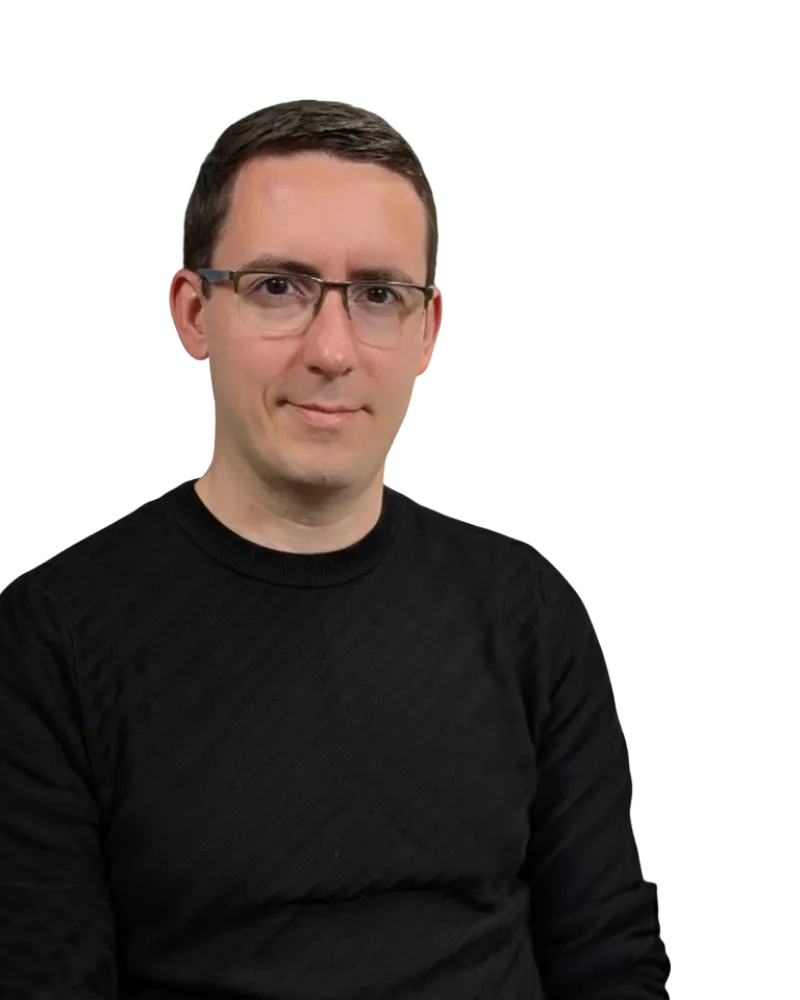
I built a cage around myself, bar by bar, from the age of six.
My story:
For over twenty years, I couldn't say my own name without my voice locking.
Not metaphorically. Literally. I spent my childhood terrified of the telephone. As a young adult I chose my meals in restaurants based on which words I could pronounce — not what I actually wanted to eat. I punched myself in the stomach before job interviews just to force the air out of my lungs so I could say hello.
All of it invisible. Nobody in the room knew.
From the outside: a confident senior leader who walked into difficult rooms and turned them around. Leading global transformation projects, rebuilding broken systems, driving change in organisations. A force of nature, people said.
From the inside: a man still fighting the same six-year-old boy who decided, one morning in school, that his voice was the thing that would always betray him.
The cage wasn't the stammer. The cage was the operating system I built around it — the perfectionism, the control, the exhausting performance of someone who had decided, before he was old enough to question it, that he wasn't enough.
You have a cage too. The bars might look different. The architecture is exactly the same.
The book:
I spent twenty years looking for the book that would tell me how to actually move — not how to feel brave, not how to find my inner strength, but how to take the next action before the fear goes away.
It didn't exist. So I wrote it.
The Ugly Rep is built from everything I learned the hard way: that you cannot feel your way into courage. You can only act your way into it. One ugly, imperfect, shaking rep before you feel ready. Then the next. Then the next.
That's the mechanism. Not inspiration. Not motivation. Repetition — the kind that proves to your nervous system, one action at a time, that you will not break.
The book is the manual I needed at twenty-five. Written from everything I've learned since.
The Ugly Rep launches November 2026.
A few practical things:
Background: PhD researcher and former university lecturer. ABS 2* and ABS 4* published academic. Ten years in corporate transformation. The skills I use to drive global projects are the exact same skills I used to rebuild my life — which is why the book reads like a project plan, not a self-help book.
Why the PhD matters here: The A.R.E.N.A. framework in the book isn't borrowed from someone else's methodology. It's built from twenty years of lived experience, cross-referenced against the research, and tested in the field. Rigour made practical.
What I do by day: I lead global digital transformation projects — dismantling broken processes, rebuilding systems and driving change. The skills I use to fix broken corporate systems are the exact same skills I used to rebuild myself. That's not a metaphor. It's the reason the book exists.
I built a cage around myself, bar by bar, from the age of six.
My Story
For over twenty years, I couldn't say my own name without my voice locking.
Not metaphorically. Literally. I spent my childhood terrified of the telephone. As a young adult I chose my meals in restaurants based on which words I could pronounce — not what I actually wanted to eat. I punched myself in the stomach before job interviews just to force the air out of my lungs so I could say hello.
All of it invisible. Nobody in the room knew.
From the outside: a confident senior leader who walked into difficult rooms and turned them around. Leading global transformation projects, rebuilding broken systems, driving change in organisations. A force of nature, people said.
From the inside: a man still fighting the same six-year-old boy who decided, one morning in school, that his voice was the thing that would always betray him.
The cage wasn't the stammer. The cage was the operating system I built around it — the perfectionism, the control, the exhausting performance of someone who had decided, before he was old enough to question it, that he wasn't enough.
You have a cage too. The bars might look different. The architecture is exactly the same.
The book:
I spent twenty years looking for the book that would tell me how to actually move — not how to feel brave, not how to find my inner strength, but how to take the next action before the fear goes away.
It didn't exist. So I wrote it.
The Ugly Rep is built from everything I learned the hard way: that you cannot feel your way into courage. You can only act your way into it. One ugly, imperfect, shaking rep before you feel ready. Then the next. Then the next.
That's the mechanism. Not inspiration. Not motivation. Repetition — the kind that proves to your nervous system, one action at a time, that you will not break.
The book is the manual I needed at twenty-five. Written from everything I've learned since.
The Ugly Rep launches November 2026.
A few practical things:
Background: PhD researcher and former university lecturer. ABS 2* and ABS 4* published academic. Ten years in corporate transformation. The skills I use to drive global projects are the exact same skills I used to rebuild my life — which is why the book reads like a project plan, not a self-help book.
Why the PhD matters here: The A.R.E.N.A. framework isn't borrowed from someone else's methodology. It's built from twenty years of lived experience, cross-referenced against the research, and tested in the field. Rigour made practical.
What I do by day: I lead global digital transformation projects — dismantling broken processes, rebuilding systems and driving change. The skills I use to fix broken corporate systems are the exact same skills I used to rebuild myself. That's not a metaphor. It's the reason the book exists.
Same road. One direction.

© 2026 Thriving Daily. All Rights Reserved